
|
Pediatric Occupational, Physical, ABA/Behavioral, Feeding, Speech, and Language Therapies Main Clinic: 931-372-2567 1445 East 10th Street Cookeville, TN 38501 Email: [email protected] HIPAA Secure Email: [email protected] Fax: (931) 372-2572 ABA Clinic: 931-201-9534 663 South Jefferson Ave Cookeville, TN 38501 ABA HIPAA Secure Email: [email protected] ABA HIPAA Secure Fax: 931-444-5840 Please call today to get started! Most insurances accepted!     |
|
| Who needs therapy? | SE HABLA ESPAÑOL |
Fine Motor Skills
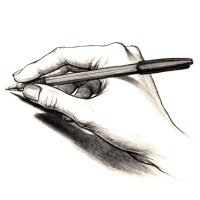
Address fine motor delays ASAP by getting an OT evaluation in the educational environment for school help and accommodations, and a medical based OT evaluation at our Center of Development.
Crawling and creeping and other weight bearing therapeutic activities help strengthen the core, shoulders and entire upper extremity, these are the foundational skills needed for good stability. Good core and shoulder stability are vital to the development of fine motor control.
Weight bearing on the palms also develops the arches and muscles needed to write and manipulate objects!
A good fine motor program must involve weight bearing, creeping patterns, cross crawl patterns, core strengthening and upper body strengthening.
Some great activities include: wheelbarrow walking, walking out on hands over a therapy ball, push ups over a therapy ball, plank holds, sit ups, push ups, scooter board activities, weighted medicine ball activities and lots and lots of creeping!
Many children with fine motor delays did not have adequate tummy time and/or were early walkers. Tummy time during the first year of life and a long crawl & creep period are VITAL for good fine motor skills, handwriting and even reading skills.
The reciprocal patterning of crawling (on belly) and creeping (on all fours) is a a huge developmental foundational skill. When little ones spend too much time in supported sitting (car seats) or walkers/entertainers and not enough time on belly in the floor, we see issues later on in bilateral skills, crossing midline, fine motor skills and even reading delays.
Fine motor activities for improved handwriting, better pencil and scissors grip, cutting, and self help skills:
1. Prior to fine motor work begin with good proprioceptive input to muscles and joints of the arms and hands, this helps to wake up the joint receptors and strengthen muscles so they are ready to work and the brain is ready to learn a new skill: wheelbarrow walking, weighted ball lifting above shoulder level, scooter boards, rope disc swings (hanging onto the rope tightly), monkey bars, crawling through tunnels, bouncing house play creeping, climbing and crawling.
Ask your OT to show you how to do joint compressions to fingers and thumb before fine motor tasks.
Have lots of squeezing toys (stress balls, sand ball, tongs, clothespins, chip clips, play dough, putty, fidget toys) making sure to squeeze with finger tips and thumb, we call these our "Crabby Pinchers".
2. Use pencil grips ONLY if absolutely necessary and it doesn't frustrate the child. If a child is not grasping a pencil with a tripod grasp and open web space (space between thumb and fingers) then they need an OT eval to determine the appropriate type of pencil grip needed. Look for an OPEN webspace (the space between the thumb and pointer) and small digital movements rather than whole arm movements after 5-6 years. Get an OT eval if they have a closed web space, thumb wrap, are using all 4 fingers often to grasp, hooked wrist patterns or using large arm movements rather than smaller finger movements when coloring. It is often better to just use short pencils or broken crayons rather than using grips.
Catch it early! If you wait too long to correct a bad grasp pattern, then it is often "set" in their motor to brain pathways and can be very hard to break.
3. Work on a vertical surface as often as possible: chalkboard, easels, desk easels, incline boards or even paper taped to the wall. Make a homemade incline board for desktop use.
4. Have lots of fine motor opportunities in every day play: let the child use spray bottles, tweezers or finger tongs to pick up small items, playing with small manipulatives such as buttons, lacing beads, popping plastic bubble packing sheets with pinchers, snapping, wind up toys, eyedropper painting, spinning tops, hole punching crafts, peg boards, legos, dressing boards and doll dress up activities are great. Have a playdough kitchen with playdough safety scissors, knives, forks, spoons to practice fine motor coordination skills with!
Attach velcro hook and loop to puzzle pieces, this makes Mom happy because the pieces stay in the puzzle and it gives resistance to pulling off the puzzle piece.
Make a fine motor can out of frosting can or creamer container and put in small raw beans, popcorn, coins, buttons, and store several in palm and manipulate up to fingertips with one hand at a time. Small slits and small openings on the top of the can encourage pincer grasp release and holding the can with non-dominant hand helps with bilateral skills.
A wonderful website for ideas is www.theimaginationtree.com mostly homemade fine motor fun!
Please check out our Pinterest links at the top for pictures and lots of ideas!
5. Think about board family games that work on fine motor manipulation and spatial awareness: Operation game, Hanging Monkey game, Legos, Tinkertoys, origami, Jenga, etc. are great.
6. Handwriting should be taught with a specific progression to learning letters (not beginning with A), it should begin with lines that go vertical, then horizontal, then diagonal and lastly "c" shapes. NEVER teach a child to make a circle to make b,d,p,q... this totally messes up their letter formation. It is not a circle, it is a "c" or "C". Handwriting Without Tears is the best program for this. For preprinting the Write From the Start program is good. Using chalk and broken crayon tips to encourage distal finger strengthening is best, after they have developed the distal finger control when they have the foundational skills to write.
7. Use tactile and kinesthetic awareness to reinforce learning the shape and feeling of making the letters:
*air writing letters with whole arm and body movements holding a weighted ball or weight
* writing letters in play dough, shaving cream, starch and water OOBLECK, rice, and resistive mediums to "feel" the motion and make it a kinesthetic memory for the muscles and and brain.
* use the woodblocks from Handwriting Without Tears so they know how to put "sticks" and "c" together to make letters, or make your own pieces from card stock or posterboard to put letters together.
*write letters in the air or in tactile stuff with eyes closed when they can!
* Wikki Sticks are Awesome!!!!! You can make all the letters, cutting shorter pieces to learn sizing of sticks. They can make their name with Wikki Sticks as well as "trace" over letters and shapes. Wikki Sticks has books and awesome cardstock learning materials I love to use.
8. Use consistently lined paper when writing letters, or use Handwriting Without Tears workbooks with grey blocks. Do not change up size of letters a lot after they have learned to make it, give a consistent size space to write in and they will learn to be consistent in their sizes. Use special writing paper such as highlighted lined paper, blue sky to green grass, raised lines, graph paper, block paper, etc. Walmart carries some speciality papers. Amazon has a lot to choose from as well.
9. Paper tilt and stabilization with non dominant hand is important as well, help them be aware of using their "helper hand"!
10. Watch out for too hard of pressure or too light, awkward grips, closed web spaces and low endurance for handwriting tasks- they may need weekly OT!
Remember that a lot more than fine motor control goes into handwriting- it is a combination of many different parts of the brain and body including vestibular, proprioceptive and tactile sensory processing!
Ask for an OT evaluation, we are happy to help!
Site empowered by
WebOnTheFly
